April Blog Post

There is a website called forevermissed.com that functions as an online memorial for people who have passed away. Upon entering the website, the first thing to see are the large words “create a memorial website”. It then gives the user the option to enter a first name and a last name before clicking a large button reading “get started”. The background of the website is sky blue, with doves flying on the top of the screen, signifying the dead ascending to the afterlife. On the bottom background of the screen is a peaceful scene of a tree in a pasture in front of small mountains. The website goes for a peaceful feel and atmosphere, using lighter colors toward the top of the screen to give the impression of hope in the afterlife.

The website about section has a few paragraphs from the creator of the website talking about his inspiration for undertaking the project. Having never met his grandparents, Oleg Andelman, decided to create an online system for people to archive their lost loved-ones so that they will never be lost from memory like his grandparents were. The site gives the user control over various themes to use for the background of the memorial as well as any music desired for the background. Once a memorial is made, there are options to add life stories, history, testimonies, tributes, and “candles” to the website. The administrator can make it possible for visitors to add tributes or can make the memorial closed to outside visitors.

Unlike physical memorials, this online memorial makes it possible for any person to access the memorial regardless of geographical location or convenience. It also makes the process of paying tribute much simpler and widely accessible. However, the physical presence of family members and friends adds a different level of personal interaction with the memory of the passed. Also, the ease of ability to pay tribute, makes the level of tribute similar to a simple post on Facebook. The time and effort required to pay respects in physical memorials makes the gesture much more meaningful. If tribute is as easily payed as just pressing a few buttons, then the gesture loses meaning.

https://www.forevermissed.com

April Analytic Blog Post

“New Girl”, the quirky little sit-com that appeared regularly on Fox, provides some very overt examples of Sellnow’s visual pleasure theory. At first glance this show, like so many others of its kind, is innocently funny. A recently dumped young woman finds three rowdy male roommates to bunk with and their lives intertwine into a weird but sweet family. It’s characters find themselves in messy and awkward situations that provide the comic relief a person needs at the end of a long work day. However, these “innocent” jokes can be further examined using terms like narcissism, voyeurism, and fetishism. Narcissism is clearly exemplified by Jess’s (the main character) best friend Cece. Cece is a tall, slender, large-breasted, and beautiful woman who is not so coincidentally a model. Throughout the show’s entire run-time, the three men that Jess shares an apartment with are infatuated with her, one of which actually becomes obsessed with her. Aside from her looks, Cece is also confident, tough, and bright. She not only embodies the perfect woman physically, but also mentally and emotionally, making her the desired “mirror” character that narcissism focuses on. 

The voyeuristic, or the “illicit or improper” character on “New Girl” is definitely Schmidt. Once upon a time, Schmidt was extremely fat and not at all cool among his peers. However, in his adulthood he blossomed into a more chiseled and better-looking version of himself. Because of this change in trajectory of his life, Schmidt feels the need to constantly sexualize everything, especially himself. At any given moment, he may take off his shirt and start flexing, or he will “accidentally” let one of his female sexual partners go into the kitchen while all of the roommates are home, or he may brag about the kinky things he has experimented with in bed. He especially objectifies Cece and her beauty, going so far as to name her breasts once the two of them have had intercourse. These highly improper sexual displays categorize him as voyeuristic.

As chance would have it, the narcissistic character and the voyeuristic character in this show are also the characters that display fetishism most effectively. Both Cece and Schmidt have what society would categorize as “ideal” body types: they are trim, slender, and toned, and therefore considered attractive. However, as I describe their body types and appearances, there is no notice taken of their personalities or lives. I barely described Cece as anything but pretty except when I called her confident and bright. Schmidt got not recognition from me except to describe him as masculine. This hyper-focus on specific body parts is the root of fetishism. It is the objectifying of a part of a person and seeing only that as opposed to seeing the character for who they are: their thoughts and feelings. 

In addition to providing excellent examples of visual pleasure theory, this show also clearly lays out models and anti-models. The models are obviously Cece and Schmidt: successful and beautiful. The anti-models are two of the show’s other main characters: Jess and Nick. While still physically attractive, Jess is also accomplished. She is a teacher, passionate about students and music, and painfully awkward in social situations, which is what makes her the female anti-model. Nick, on the other hand, would be considered attractive but without the muscle and “classic” good looks that Schmidt exemplifies. Nick is also a bartender, barely making minimum wage and almost always out of money, a constant theme throughout the show. This lack of success and ambition is what categorizes Nick as the anti-model. 


Analytic Blog Post- April

Culture jamming is commonly known as “ad parody” and is a strategy of rhetorical protest in hopes of provoking change in the media. Those who take part in the rhetorical pranking, the pranksters, are those who see an issue with a corporation or organization and want to make a change with visual protest. For this analytic blog post, the context, intent, effect, and effectiveness of this McDonald’s image will be discussed.

McDonald’s is the world’s largest fast food chain with over 36,000 stores worldwide. The restaurant is notoriously known for it’s lack in healthy foods and the effects that it can have on one’s body. Despite the corporations efforts to include “healthy” options, such as salads and snack wraps, these products are still proven to be unhealthy. There have even been film documentaries, such as “Supersize Me” that have been focused on how unhealthy McDonald’s food is to eat. Despite this common knowledge, billions of people are served yearly at McDonald’s. This example of culture jamming is a tactic to disrupt those who eat at McDonald’s and remind them that while they are intaking the food they know is not healthy, they are gaining weight by eating it. It’s a reminder that consumers don’t necessarily think about when they’re munching down on their Big Mac and large fries.

The design of the ad is cleverly done, playing off of the well-known logo, the McDonald’s golden arches in the shape of a “M” and instead is flipped upside down to be a “W” representing the word “weight”. It also plays off the slogan, “I’m lovin’ it” with “I’m gainin’ it” which of course refers to the weight that you’re gaining by eating the food and is shown in the top part of the ad. The placement of the word “weight” is also well done, showing that it is weighing down the golden “W”. All aspects of this ad design were well done and make consumers or viewers of this ad stop and think and at this point, they can’t ignore the fact that the food does make you gain weight. Will this stop them from eating it? More than likely no but by association, they are more likely to think back to this ad and be reminded of the weight they gain when they intake McDonald’s food.

Clearly put, the intent of this culture jamming is to remind consumers that McDonald’s is not healthy and will make you gain weight and thus could lead to other health issues relating to weight gain, such as heart disease or diabetes. This ad’s purpose is not so much to shame those who eat the food but rather remind them of the effects.

The effect of this ad is that people will eat less McDonald’s and by extension, be kinder to their bodies by what they put in it after seeing this ad. Unfortunately, people are stubborn and like what they like and one parody ad will not make the world of difference but it is a subtle image that a person can think back to when they eat McDonald’s so it’s effectiveness could vary a great deal. I believe that it is a successful example of culture jamming. It’s purpose is to encourage a progressive change in human’s attitude towards fast food and is cleverly done using the aspects of the original logo and slogan.

Analytical Blog post #4

For my sixth analytical blog post I am going to write about the topic on how the media portrays and sexualizes women in the media. After watching the Goffman video in class it really opened my eyes to how much impact the media has on our lives and the manipulation it can use on us. In our society today, the media has a major impact on how we look and feel about ourselves by portraying images of what we ought to be or what we should look like. Over the years we have seen a major increase in advertisements using skinny models and sex appeal to sell a particular product. Over time this affects how people feel about how they look because they are forced to compare themselves to everyone they see and attempt to look just like that. Americans spend a whole bunch of time watching T.V, searching the internet, and reading magazines and it is almost impossible to avoid exposure to feeling judgement about how we look and feel about ourselves. The average fashion model wears around size two to four whereas the average American woman wears around size twelve to fourteen. One could only imagine what impact this would have on women’s attitudes and psychological well-being when being exposed to models every single day and comparing themselves to them. These “false body image” ads are showing bodies that aren’t a true standard of what is around us every day and is not a real representation of the general population. When kids are growing up and are exposed to this media, they will be more likely to believe that this is what is considered acceptable, and this is how they should look. However, the truth of the matter is that these models are causing young women and men to develop eating disorders such as bulimia and anorexia which can lead to depression and other psychological disorders over time.

In the video they talked specifically about how women are use in advertisements vs how men are shown. Women are shown in very childlike poses whereas men are represented as being strong, alert and ready to take on anything that comes at them. He talks about the way women tough themselves softly vs the way that men touch things with force. In this picture the women are shown laying down which represents that it is difficult for her to defend herself, or she is submissive and powerlessness. Whereas the man is seen staring at the picture with a look on his face that tells you he is in control of the situation. Men are active, alert and ready to respond in most image situations whereas the woman is much more vulnerable or not even aware of what’s going on around her. She looks “checked-out” in the picture which shows that she isn’t aware of her surroundings. The women in this picture drifts away into her thoughts whereas the man is there to anchor and protect. They talked about how men have to prove themselves into manhood whereas women never leave girlhood and are portrayed in these sexual positions. I do not fully agree with this statement because it is very clear that women have to essentially proves themselves as well into womanhood. Such has having a child and doing other maternal things, so I don’t think that it is fair to say they don’t have to prove themselves.  In this advertisement it shows that the women’s head is tilted up in a submissive position, which mammals do when they are around the alfa. Advertisements do this sexual appeal because it has notoriously been known for sales in recent years. People are drawn towards sex and when it is utilized in the advertisements, it does sell.

Analytical Blog Post #6

Kaitlin Bryan

Professor Jamie Downing

Analytical Blog Post

30 April 2019

Culture Jamming according to Harold is, “a strategy of rhetorical protest”. In other words it is a form of rhetoric that disrupts the normalcy of how we know life and forces people to stop and think. This essay is going to take turtle and plastic straw video and an ad that has come about because of it. It will analyze its intent, effect and its effectiveness.

This paper will begin by discuss what occurs in the turtle and straw video. It is a video that has been seen by over 35 million people (youtube). It is a video of a turtle that is pain because there is a straw that has been stuck in its nose. There are people who work with the turtle until they can dislodge it. It is a very graphic video and difficult to watch, but leaves a lasting imprint on anyone who does watch the video. Now the image of the turtle that was posted by GreenPeace has the slogan, “Don’t suck the life from our oceans”. The image shows a turtle that is in the process of eating or choking on a straw. The turtle is in a cup of water and blends in with the typical bend of the straw. It is a very normal looking picture of a cup with a straw in it until you realize the turtle that is at the bottom of the straw. This is an example of culture jamming. It is an “interruption, a sabotage, hoax, prank,  banditry, or blockage of what are seen as the monolithic power structures governing cultural life” (Harold, 192). It appears to be a regular drinking cup, but a very obvious turtle eating a straw causes the audience to stop, stare and question.

The intent behind this image is to bring awareness to the effect that our plastic waste can have on animals. According to National Geographic, 500 million straws are used a day, and 8. 3 billion plastic straws have been said to pollute the world’s beaches. The intent that this video and ad have are to bring awareness to the amount of straws that we use. The UGA New Materials Institute found that 100% of turtles have eaten plastic, including baby turtles who have suffered and died as a result of ingesting plastic (strawlessocean.org). All this being said this ad produced by GreenPeace is wanting to bring awareness to this issue and reduce the amount of plastic going into the ocean. This form of verbal culture jamming is “the stopping of corporate media” (Harold, 192).

Next this paper will discuss the effect that this campaign has on the surrounding community. When the video of the turtle became popular, people began to advocate for getting rid of straws. Some of these people included various restaurants who banned straws from being served in their restaurant. According to National Geographic on January 1st 2019, the serving of plastic straws in restaurants and other businesses were banned starting in Washington D.C. Restaurants quickly hopped on board, such as, Starbucks, Mcdonalds, and Bon Appetit, a food service company with one thousand locations in the U.S. are all little by little wanting to completely get rid of using straws. As of now, they will not serve them, unless you ask. Alaska Airlines is one of the first airlines to come behind this campaign and not serve plastic (nationalgeographic).

This campaign has become rather effective, a slogan called, “Skip the straw” and caught footing (sailorforthesa). Advocating for the reduction of plastic straw use with the hope of one day fully abolishing any unnecessary use of them. There is of course the expectation of those few whose physical ailments have caused them to need straws to eat and drink. Slowly but surely getting rid of straws has become more apparent. July 11 is now classified as “Straw Free Day”. According to Eater, in the recent several months, many American cities and famous celebrities, including Tom Brady, have all come behind the ban-the-straw-movement. Starbucks hopes to abandon all use of straws by 2020. Now many people are using metal reusable straws (eater).

Culture Jamming is obviously a very effective means of advertising as can be seen by looking at the impact that the picture and video of the turtle and the straw have on society.


Work Cited:

Gibbens, Sarah. “A brief history of how plastic straws took over the world.” Plastic straw bans are spreading: Here’s how they took over the world. 03 Jan. 2019. National Geographic. 30 Apr. 2019 https://www.nationalgeographic.com/environment/2018/07/news-plastic-drinking-straw-history-ban/>.

“Why This Matters.” For A Strawless Ocean. 30 Apr. 2019 https://www.strawlessocean.org/faq.

“Skip a Straw – Save a Turtle.” Sailors for the Sea. 16 Mar. 2018. 30 Apr. 2019 http://www.sailorsforthesea.org/programs/ocean-watch/skip-straw-%E2%80%93-save-turtle>.

https://www.eater.com/2018/7/12/17555880/plastic-straws-environment-pollution-banned-alternatives-ocean-sea-turtle-viral-video


https://www.plasticpollutioncoalition.org/pft/2015/10/27/the-turtle-that-became-the-anti-plastic-straw-poster-child

https://www.youtube.com/watch?v=4wH878t78bw

ABP #6

That 70s show is an American television show started in the late 1990s that portrays 6 teens and their lives during the 1970s. According to Sellnow (2007), visual pleasure theory suggests that visuals work together rhetorically to communicate messages of narcissism, voyeurism and fetishism (p. 65). That 70s show uses narcissism, voyeurism and fetishism to portray the dominant ideologies that women are sex objects and men should be more masculine, sexual and tough. These ideologies are reinforced on the show by the model character of Donna and the anti-model of the character Fez.

Sellnow (2007) defines a model character as a character that is rewarded based on their image, characteristics and behaviors (p. 65). For that 70s show, the model character is Donna Pinciotti. Donna can be seen in the image below as the redhead on the far left hand side of the image.  Throughout the show, Donna is seen wearing tight fitting clothes that show off her body and her sex appeal and even using her sex appeal to help her friends (i.e. flirting with a milkman to steal the milk crates). The show promotes the ideology that women should be seen as sex objects and to promote this ideal, Donna, as the model character is rewarded for within this ideology. In the show, she has a long-term boyfriend named Eric who loves her and is even the host of a radio show, where her voice is known as “Hot Donna.” “Hot Donna” is a reward in itself, but also is utilized to show that Donna is attractive and her most important trait is her beauty and being a sex object for the male gaze. Her relationship with Eric exemplifies Sellnow (2007)’s concept of narcissism, or when a character draws a viewer to them to mirror them (p. 65). Donna makes sure that she is seen as desirable to men in terms of her looks and clothing and is rewarded for it by having a steady boyfriend and being successful in life. Seeing her rewards and her position as a sex object on screen causes the viewers to desire Donna’s life and want to mirror her actions and image. This also operates as an enthymematic association to viewers, as it relies on the cultural knowledge (or unstated premise) that only attractive or “hot” women will be successful or happy in life (DeLuca, 1999, p. 18).

In addition, Donna’s behaviors and characteristics also exemplify Sellnow (2007)’s concept of fetishism, which is when an image is portrayed as a spectacle to be gazed at as an object ( p. 65). There is one point in the series where Donna’s dad sends her to catholic school for her last year of high school as a punishment for her trying to run away. She then has to go to catholic school and is seen wearing her catholic school uniform for the rest of the season. The guys she hangs around with love seeing her in the catholic school uniform as it is a common sexual trope, and the constant image of her in the uniform exemplifies fetishism and reinforces the ideology that she is a sex object and there to be looked at by men.

Finally, Fez is portrayed as the anti-model in that 70s show. The anti-model is defined by Sellnow (2007) as a character that is chastised, laughed at and punished based on image, characteristics or behaviors (p. 65). Fez is an odd character that sticks out from the rest. First of all, he is from a foreign country, is flamboyant, wears tight-fitting clothes and pants and is emotional. All of these behaviors go against the ideology that men should be masculine, tough, sexual creatures who show no emotion. As a result, Fez endures several punishments. For example, Fez is single for the majority of the show and when he does get a girlfriend, they are either larger and therefore seen as undesirable (i.e. Big Rhonda) or crazy and obsessive (i.e. crazy Caroline). In addition, he is the last person on the show to lose their virginity, which is seen as “uncool” and unmanly. In addition, Sellnow (2007)’s concept of voyeurism, or when a character’s behavior is illicit or improper, is demonstrated with the anti-model Fez (p.65). In the show, Fez finally gets a “hot” girlfriend named Nina, but she breaks up with him because he is too needy. Men are not supposed to be needy; they are supposed to be manly, cool and aloof. This behavior is improper and therefore he is punished for this voyeurism by Nina leaving him. The voyeurism present in the show and the use of Fez as the anti-model reinforces the ideologies that men should be tough, manly and sexual.

Analytic Blog Post #6

For this analytic blog post I chose to reflect and dissect some of the meaning and theories that Christine Harold explored and stated in her article regarding pranking rhetoric. Throughout Harolds writings she focuses on “culture jamming” in the act of rhetorical protest. Culture jamming is defined as as a media tactic to subvert or disrupt the mainstream media culture. Basically, the ‘media pranksters’ deploy the tools that drive culture jamming and pranking rhetoric and take advantage of brands, businesses and any other noticeable media powerhouse with truths and exaggerations to open the eyes and bring attention to the public.

The logo above is one of the most noticeable and famous logos in America. The culture obsessed Starbucks. Most everyone who loves coffee loves Starbucks, but there are the haters. “The coffee isn’t hot enough.. I have to pay over $5 dollars for a regular cofffee.. why wouldn’t I just go to Dunkin Doughnuts?..’

These are all fair and revolving questions that I hear about Starbucks consistently.

Although I do find myself more often than not in the line at Dunkin Doughnuts rather than Starbucks, the above visual is an example of pranksters on the media using tools to exaggerate (really not an exaggeration) the price of a coffee from Starbucks.

Yes it is true that Starbucks costs a lot for a cup of joe, and it’s not “even that much more noticeably better than other coffee shops”, but for some reason even I find myself at Starbucks paying $5.50 for a large coffee. It’s a part of our culture but something we still don’t turn our backs on and abandon because it is so culturally accepted.

There are countless other refurbished brand logos that have been remodeled to expose the truth whether it be known, true or exaggerated regarding their brand and its management. All of the edits are examples of pranking rhetoric and culture jamming.

The online pranksters are using tools and the media to create visuals regarding our rhetoric terms to the mass media audience.

ABP #6

Culture Jamming – “Dumb Starbucks”

In an episode of “Nathan for You”, a comedy show hosted by Nathan Fielder, Nathan helped rebrand a struggling coffee shop as “Dumb Starbucks” to increase sales. Nathan notes that parody, “allows you to use trademarks and copyrighted material as long as you’re making fun of them.” Therefore, all Nathan had to do was claim that he is a parody artist, and that the name “Dumb Starbucks” was a parody of Starbucks.

It ended up working, and the “Dumb Starbucks” gained mass media publicity and a ton of customers. It sold similar drinks to Starbucks, but at cheaper prices. And since it is parody, they are allowed to use Starbuck’s name. The “Dumb Starbucks” coffee shop copied their logo, interior design, color schemes, employee uniforms, and menu all after Starbucks.

Fielder also performs other small acts of parody to build up his character as a parody artist, so that he can prove that what he is doing with the Starbucks name is a parody if the authorities got involved. This example´s purpose is to be funny, popularize Nathan Fielder´s T.V. show, and bend the rules of what is copyright and what is ¨parody.¨ This is a question that is hard to answer. Users of parody often mock large, capitalistic monopolies or businesses that can stand to get parodied by citizens of its country (such as Starbucks, Burger King, and McDonalds.) Nathan imitates Starbucks from its logo to its actual name.

This is where parody can be dangerous, yet it can also facilitate the common good of the people. Wherein Nathan mocks Starbucks, the main goal is to stretch the line between parody and abusing copyrights, and Nathan does this successfully and with a lot of attention from the press and media as well. This brought up legal issues, and Starbucks ended up not being able to sue, or not suing.

In summary, Nathan´s purpose was to be comedic and gain popularity for his show. However, the stunt itself gained media coverage before the episode ever aired. The media coverage was a result of crowds of people getting coffee at a place called ¨Dumb Starbucks.¨ Therefore, Nathan exhibits culture jamming through this stunt. It also opens the door for other platforms to get attention with their own forms of rhetorical parody, which can be seen in the picture with ¨Dumb Plastic.¨

Harold describes culture jamming as when one ¨disrupts existing transmissions. It usually implies an interruption, a sabotage, hoax,prank, banditry, or blockage of what are seen as the monolithic power structures governing cultural life¨ in her article ´Pranking Rhetoric “Culture Jamming” as Media Activism.´

Harold talks about parody and pranksters. The difference between these terms is significant to Harold. She believes that parody can only do so much, and has limitations, so to say. Harold writes, ¨whereas the culture jammer as saboteur opposes commercialism through revelatory rhetoric such as parody, pranksters can be seen as comedians.¨ Is Nathan´s prank a parody or prank? I believe Nathan is intersecting the boundaries of what these words mean. This is because Nathan is using parody throughout the stunt, but the purpose of Nathan is comedy, and it is a prank. It may not be the most insightful prank or important one, but it does open the door for pranksters and mocks one of the largest corporations of America.

Analytic Blog Post– April

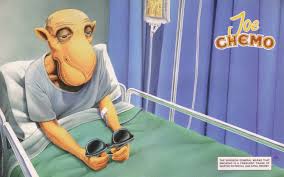
For my analytic blog post, I have chosen to take a look back at culture jamming. In Christine Harold’s article, Pranking Rhetoric: “Culture Jamming” as Media Activism, she makes the point that “culture jamming” is an effective strategy of rhetorical protest. She goes onto to talk about how “pranksters” deploy the tools of the mass media and marketing in order to take advantage of situations and draw new meaning and light to the seriousness of situations. As an example of this, I chose a picture of Joe Camel, the infamous American cartoon used to sell cigarettes during the 1980’s and 1990’s, receiving chemotherapy as a result of smoking. During the 1990’s there was a lawsuit filed against the cigarette company, R. J. Reynolds Tobacco Company, saying that using a cartoon character appealed to children. According to the New York Times, The Federal Trade Commission determined that “the company violated Federal fair trade practice laws by promoting a lethal and addictive product to children and adolescents who could not legally purchase or use it.”

Before this ruling happened however, there was a large wave of artists that brought light to the public health issue in a series of cartoons aimed to show the true impacts of smoking to children. These cartoons are a great example of pranking rhetoric because of the artist’s campaign aims to poke holes in the original narrative and demonstrate an alternative reading to what the original campaign hoped to accomplish. According to Harold, the prankster, uses the culture jamming form to express opposing dominant rhetorics, but then playfully and provocatively makes the narrative fold over on itself. In the Joe Camel ads, Joe Camel seems to live a cool life, riding motorcycles, laying on the beach, playing pool and just generally being “smooth”. By using the same character, similar art techniques and colors the Joe Chemo ad is then almost an answer to the question, ‘what is next for Joe Camel’. Quickly, the message of a suave cartoon camel is turned into an ill and bed ridden one. The reason these images work so well to convey a message is because of the “jamming” part of the culture jamming process. According to Harold, jamming, although it often implies a free-form chaos, requires knowledgeable and disciplined players to work.”

In order for the Joe Chemo ads to work, the audience in which they are intended must also have the same understanding of the issues at hand. If only the Joe Chemo ad was shown to children now, they would not have the background knowledge of who Joe Camel is, therefor it is important that audience be aware of the issues surrounding Camel cigarettes in the 1990’s. Ultimately, the FTC made the right call in banning the use of the Joe Camel cartoon ads, and the artists that produced the culture jamming pieces supported those efforts but playing to the audience’s understanding of current issues and willingness to see the original narrative fold in on itself.

Analytic Blog Post #4

For this analytic blog post, I wanted to examine PETA’s use of rhetorical culture in regards to the Pokémon franchise. This is not a joke. People for the Ethical Treatment of Animals has a long catalogue of parody games used to promote the attitudes towards animal treatment by painting these seemingly innocuous pieces of media in the horrifyingly real light that their subject matter would actually attract if they were to be taken more seriously. In specific, I wanted to look at their unusually dark and disturbing 2012 game, Pokémon: Black and Blue, a spin on the Black and White entries in the popular Nintendo game franchise of the same name. The game follows a group of liberated Pokémon, small creatures whose canonical purpose is to be captured and do battle with other Pokémon, going on a warpath defeating trainers and changing their views on “Pokémon rights.” I have decided against including a visual because I feel that it would be much more effective just watching or playing the actual product, which is available for free online. The intent of the appropriation of the Pokémon branding was to point a finger at perceived injustices towards animals in real life, such as exploitative use in real life as entertainment or in making clothes, which are all topics that his parody game hits on. This, as Harold points out is a form of pranking activism, by temporarily stealing the attention away from the media they are parodying. The purpose of using the brand in their marketing as a form of appropriation was likely done for two reasons: 1) they needed a recognizable brand that would draw a significant amount of media coverage and would likely reach a large audience, which it did, and 2) by using this brand as the basis for this parody, they could play with the inherent messages present in the actual games, such as animal kinship and opposition to those who would misuse these creatures. What I find interesting in this piece is the idea that the Pokémon franchise elicits this violent attitude in its audience that would cause them to take gleeful pleasure in fighting in animals in real life, which is demonstrably false considering the wide popularity of the series as a whole. While it does not discourage these attitudes per se, there are messages within the intent of encouraging positive interactions with Pokémon (animals) and that the proper treatment and friendship with these creatures is usually one of the key takeaways present in the franchise, something that PETA was seemingly aware of, but chose to ignore regardless. On the whole, it must also be taken into account how effective this has been as a tactic. Looking at many online gaming commentators and streamers playing this game shows that, for the most part, the message has backfired, as there is usually an air of mockery in the examination of these products. The over the top violence and gore combined with the cheap presentation lays bare the idea that this is a simple marketing ploy by PETA to conjure their ideologies. I feel that the only people who this will effectively convert are those who are already somewhat in agreement with PETA’s philosophy towards the treatment of animals. However, on the other hand, it could just be because, as an organization, PETA is already far too controversial in their own right. The idea behind culture jamming should be to seek out media from contentious sources, but when the source of the culture jamming is themselves entangled in controversy, it likely weakens the message and, in this case negates the intended effect.